The New Advisor Advantage: Turning Information Into Better Advice
For wealth professionals, it frames the competitive question as less about access to information and more about how advice is applied in client conversations and decisions.
Growth, pricing, technology and talent: how successful advisory firms are built and run. Selected by our editors.
37 videos and podcasts · new this week: 20
Agency MBS sits in many core bond mandates, so a manager's read on spread levels and on where active selection might add value is relevant background for advisors reviewing fixed income exposure. The discussion of pricing inefficiencies also speaks to the case managers make for active rather than index exposure in the sector.
Picked by the running an ria deskFor wealth professionals, it frames the competitive question as less about access to information and more about how advice is applied in client conversations and decisions.
The bond segment and the mortgage-paydown-versus-bonds comparison map onto common client conversations about fixed income and debt. The discussion of home country bias and currency risk touches on portfolio construction questions advisors field from clients.
It offers a framework for explaining a sharp move in yields to clients, including which explanations the guests set aside and which they emphasise. The comparison of today's starting yields with a decade ago is relevant to how advisors frame fixed income positioning in client conversations.
For wealth professionals, it offers a historical frame for non-portfolio factors that shape financial outcomes and includes discussion of the rise of financial advising as a profession.
It is a practitioner account of using YouTube as a client acquisition channel, which may interest advisors weighing content marketing against other growth routes. The episode focuses on the creator's own experience building an audience and converting it into advisory prospects.
It is a practice-building conversation rather than a markets one, covering how an advisor's background and family partnership shaped her team and client base. Advisors thinking about how they present their own story and structure their practice may find the career path and client-relationship discussion relevant.
For wealth professionals interested in firm leadership and internal career paths, the episode focuses on progression within one RIA and the responsibilities that come with management and business development.
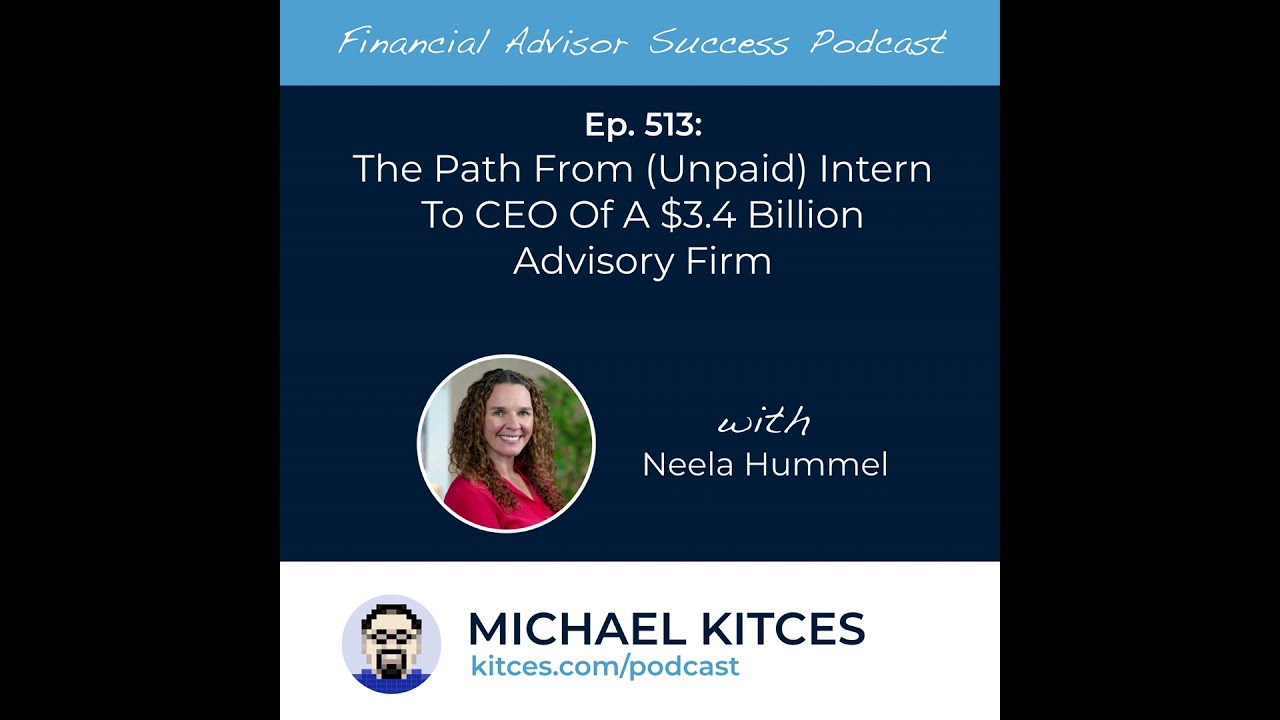
For wealth professionals interested in firm leadership and career progression inside a single RIA, the episode focuses on how one CEO moved from intern to top executive. It also addresses management, business development, scheduling, equity ownership and career development within an advisory firm.
It addresses the oversight and compliance questions that arise when a private fund manager puts AI into live workflows, framed from the perspective of an in-house general counsel and compliance officer.
The episode is a first-person account of a career break and a structured reentry route back into an asset management role. For wealth professionals involved in hiring, team building or their own career planning, it describes how one large manager frames that path and the issues a returning employee raises.
The episode touches on bond allocation, the trade-off between mortgage paydown and bond purchases, and international diversification with currency risk, all of which can come up in client conversations. The housing discussion may also be relevant for advisers fielding questions about home prices and higher mortgage rates.
For wealth professionals, the episode focuses on the client-relationship side of advising rather than technical or market content. It frames the advisor’s guide role as a practice issue tied to empathy, self-reflection and referrals.
For wealth professionals, the episode ties AI adoption to practical operating questions such as data ownership, vendor relationships and cybersecurity. It also raises deal-agreement awareness and questions about the credibility of advisor rankings.
Advisors can hear the questions institutional investors use to judge wealth management firms, which may inform how they assess the platforms, partners or firms they work with. The episode frames firm economics and growth quality from an investor’s perspective rather than an advisor’s or recruiter’s.
The episode focuses on the gap between the financial life a client says they want and the one they lead, which is the terrain advisors work in when coaching client behavior. It also raises whether this work needs a financial therapist or can be handled through self-work and introspection, a question relevant to where an advisor's role ends.
For wealth professionals, the episode addresses a client challenge that extends beyond portfolio construction: helping clients with concentrated stock and newly created wealth make decisions around risk, liquidity, taxes and estate planning.
It offers a practitioner's account of how a sudden health event tests an advisor's own financial and business resilience, and of what rebuilding a book of business looked like afterward. Advisors who work with clients through medical crises may find the client-conversation angle relevant.
Advisors often use client reviews as social proof, and the episode focuses on the compliance boundaries and operational friction involved in collecting and publishing them.
For advisors running a firm, online reviews can serve as social proof in a trust-sensitive business, but the episode focuses on the compliance issues that come with collecting and publishing them. It may be useful for those weighing a review strategy against marketing-rule requirements and common pitfalls.
Advisors often deal with older clients and their family members, and the episode links account-security basics to the question of how cognitive decline shows up in money management. It offers concrete, low-cost steps — passkeys, multifactor authentication, device and home-network hygiene — that a professional can pass along.
It is framed for advisors thinking about how to define a niche and communicate their value to clients.
For advisors focused on growth and client acquisition, the episode discusses how meeting structure and communication affect how prospects move toward becoming clients.
The episode focuses on the mechanics of the prospect conversation — listening, reflecting concerns, and the transition to a second meeting — which is where advisory firms convert interest into relationships. It also touches on how leadership shapes the discovery process and how an advisor's value story is told.
New manager videos, podcasts and our own running an ria stories on My Desk and in your morning edition.
Free. One click to unfollow. Readers who are not signed in can follow in this browser and sign in later.
The private wealth industry in four minutes, every morning at 6:30 a.m. ET. Free.
Free. Every morning. Unsubscribe from any edition in one click.